
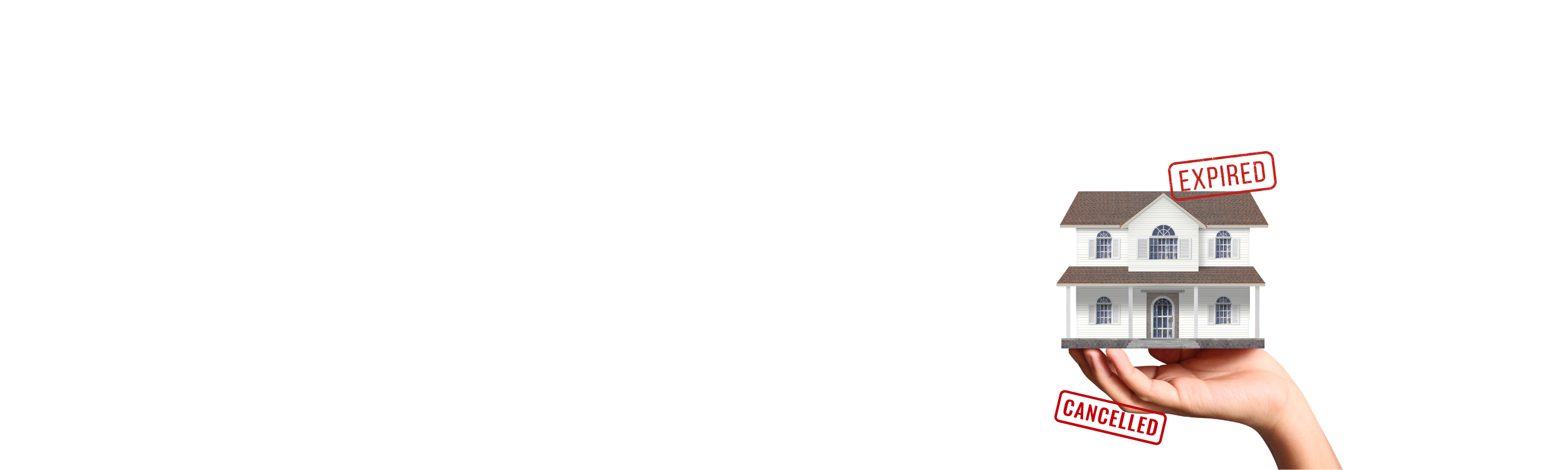
Why Didn’t My Home Sell?

When a home does not sell, it is frustrating.
You prepared the house, cleaned for showings, kept your life on pause, waited for offers, and then nothing happened. Or maybe you got activity, but no strong offers. Or maybe the feedback did not match what you expected.
The good news is that most unsold listings can be diagnosed.
Usually, the issue comes down to one or more of five things:
Pricing strategy
Presentation
Marketing
Buyer targeting
Timing and market conditions
I created this page to help homeowners understand what may have happened and what to do differently if they decide to try again.
Most homes do not sit because of one single issue.

The goal is not to blame anyone.
The goal is to understand what happened, so you can make a better decision about what to do next
A home that does not sell usually has a story behind it.
Sometimes the price was close, but not compelling enough.
Sometimes the photos did not create the right first impression.
Sometimes buyers liked the home, but had concerns about condition, layout, location, updates, or value.
Sometimes the market shifted while the home was listed.
And sometimes the feedback was there, but the strategy did not adjust quickly enough.

7
common reasons a home does not sell.
5. Showing access was too limited
Buyers move quickly. If a home is difficult to show, some buyers will simply skip it.
That does not mean sellers need to make their lives miserable. But access is part of the strategy. The easier
it is for qualified buyers to see the home, the better chance the home has to create offers.
6. The market changed while the home was listed
Interest rates, inventory, buyer confidence, and competing listings can all shift quickly.
A pricing strategy that seemed reasonable at the beginning may need to be revisited if buyer behavior
changes. The market is not static, and a listing strategy should not be static either.
7. The feedback was there, but the plan did not adjust
Buyer feedback is only useful if it leads to action.
If buyers consistently say the same thing, that is market data. The right move might be a price adjustment,
new photos, staging changes, repairs, different messaging, or a pause-and-relaunch strategy.
The worst thing a seller can do is ignore repeated feedback and hope the next buyer sees it differently.
1. The price was close, but not compelling
Many sellers think a home is either “priced right” or “overpriced.” In reality, the difference can be more
subtle. A home can be close to the right price and still not create enough urgency for buyers to act. In a changing
market, buyers compare everything. If your home felt slightly high compared to other options, buyers may
have waited, moved on, or used your listing to justify buying something else.
2. The first impression did not create enough interest
Most buyers decide whether they are interested before they ever step inside.
Photos, video, staging, lighting, description, layout, and online presentation all matter. If the listing did not
stop buyers from scrolling, the home may not have gotten a fair chance.
3. Buyers had an objection they could not get past
Sometimes buyers like a home, but they get stuck on one issue.
It could be condition. It could be the floor plan. It could be needed updates. It could be road noise, a sloped
yard, HOA dues, inspection concerns, or something else entirely.
The key is figuring out whether the objection can be fixed, reframed, priced into the strategy, or overcome
with better presentation.
4. The launch did not create momentum
The first week or two on the market matters.
That is when a listing usually gets the most attention from active buyers. If the home launches without
strong photos, clear pricing, good exposure, and easy showing access, it can be hard to recover later.
A relaunch needs to feel intentional. Not just “back on the market.”
What I look at in a second opinion
When I review a home that did not sell, I look at the full picture.
That includes:
The original list price and any price reductions
Days on market
Competing homes at the time
Comparable sales
Current active competition
Photos and online presentation
Listing description and positioning
Showing access
Buyer feedback, if available
Condition and preparation
Timing of the launch
Whether the home should relist now, wait, update, rent, or take a different approach
This is not about criticizing the previous attempt.
It is about figuring out what actually happened and what would need to change if you decide to try again.

You may not need to do everything differently.
Sometimes the best advice is to wait.
Sometimes it makes sense to relaunch quickly.
Sometimes a few small changes could make a big difference.
Sometimes the price needs to be adjusted.
Sometimes the home needs a new story.
The point is not to push you back onto the market immediately.
The point is to help you make a better decision with better information.
Request a no-pressure second opinion.
If your home expired, canceled, or came off the market and you are still thinking about selling, I am happy to take a look.
This is not a listing appointment. It is a strategy conversation.
I will review what happened, give you my honest read, and help you think through your options. No pressure. No obligation. Just a fresh perspective.
What happens next?
After you submit the form, I will review the listing history, comparable sales, current competition, and market conditions.
Then I can share a practical summary of what may have affected the sale and what I would consider doing differently.
Depending on your situation, that may include:
Adjusting the price strategy
Improving presentation
Reworking the listing copy
Updating photos or video
Better targeting the likely buyer
Relaunching at a better time
Making selective repairs or updates
Waiting until conditions improve
A Better Relaunch Starts With a Better Diagnosis
A home that did not sell the first time is not automatically a bad listing.
But the second attempt needs to be smarter.
Before you relist, it is worth asking:
What would we do differently this time?
That is where I can help.